Summary:
|
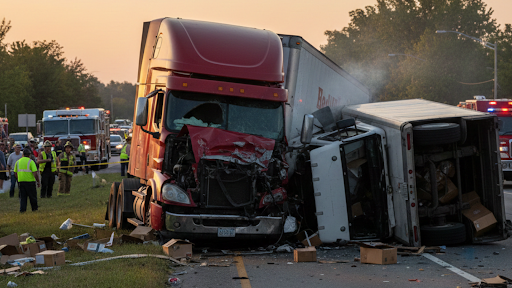
Have you recently been in a truck accident and are thinking about filing a case?
Or do you think you have been wronged?
A recent report by Injury Facts shows that, in 2023, there were 5,375 large trucks involved in a fatal crash, an 8.4% decrease from 2022 but a 43% increase in fatal crashes over the last 10 years.
Truck accidents can be catastrophic, causing severe injury or even leading to death. It’s important to file an insurance claim immediately after the accident to check who is at fault, i.e, whether the truck driver was speeding, or if there was a mechanical failure. This helps authorities to get a fair reason and act accordingly.
That’s where “Black Box Data” or EDR (event data recorder) comes in. This system works as a digital witness in the accident investigation.
The trucking companies have access to control and manage the data. That’s why immediate action is necessary to preserve the evidence and make the case strong.
Go through this blog and understand what black box data is, how it acts as key evidence, how lawyers use this data, and what victims should do.
What Exactly Is A Black Box In A Truck?
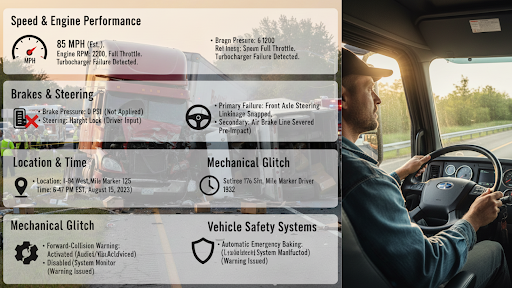
A Black box is a type of telematic system used in modern trucks that helps to record and store data, which includes:
- Speed and engine performance
- Brakes (where applied) and steering wheel position
- Location and time
- Mechanical glitch
- Vehicle safety system
These factors help provide information related to what could have happened to the individual involved in the accident.
Why Black Box Data Matters After An Accident
Before we dive into how lawyers help, it’s important to understand “what role Black Box Data plays in a truck crash case.”
The data from the black box helps prove the reason leading to the truck accident, and this provides lawyers with clear insight.
Here is how it works:
| Role | Purpose | How Black Box Data Help | Example |
| Confirms Witness Statement | To check if the eyewitness statement matches the real event. | Compares data (i.e, speed, brakes) with what people saw | Witness says the truck’s speed was over the limit range mentioned. |
| Contradict The Trucking Company Claim | Proves the company or driver statement wrong. | Highlights the reality | The company blames the victim, but data shows the victim wasn’t at fault. |
| Prove Negligence | To check rule-violation or driver carelessness. | Focus on driver actions (speeding, fatigue, braking hard, wrong turn) | The victim drives for more than 11 hours and avoids a break. |
These evidences are used by the litigation lawyer that combine and create a clear picture of the truck accident. This helps strengthen the victim’s case, whether they want an insurance claim or a proper lawsuit.
| Note: black box data alone doesn’t decide the case, but other evidence, like police records, medical reports, is also considered. |
The Challenges of Accessing Black Box Data
-
Control Of The Data:
The information in the black box belongs to the owner of the truck. Sometimes, the trucking companies refuse to hand over the data to the attorney, fearing it could expose liability.
-
Timing:
Most of the black box data is stored for a specific period of time, i.e, “30-60 days,” so it’s important to take quick action soon after the accident before it’s lost.
-
Device Damage:
The collision may damage the EDR system and can create technical issues, too.
| Note: The right expert can help retrieve the data based on the condition. |
How Lawyers Help Preserve, Access & Use Black Box Data

Here is a step-by-step guide that will help you understand the process in detail and how a truck accident lawyer deals with it:
Step 1: Send A “Spoilation Letter”
Many trucking companies often try to erase the data from the black box to keep themselves safe.
To avoid this, a lawyer sends a spoliation letter (a formal letter) asking the company not to delete or change any evidence.
This helps protect the evidence and acts as a legal warning.
Step 2: Filing A Court Order
If the company refuses to share the data, then a lawyer can ask for a subpoena (a written order to hand over evidence).
Step 3: Collecting & Combining Black Box Data With Other Evidence
The data from Black box is limited and provides factors such as speed, braking factors, acceleration, or deceleration, and driver behavior.
But other evidences are also required to make a fair decision, such as:
-
- Dashcam footage: Visual evidence of the incident.
- Witness statement: Acts as a third-party proof.
- Police reports: Official document.
- Maintenance Records: Shows whether the truck was properly serviced.
- Phone details: To check the usage of the phone during the incident that happened.
- Driver Qualification: Check the driver’s records, i.e, driving license, and driving history.
All this evidence is combined to reach a conclusion and find out who is at fault.
Step 4: Present Hard Evidence
Most of the trucking companies try to settle at a low price. But the evidence can help you get a fair price. When the insurance provider sees that you have hard evidence and are in favor, then they are less likely to offer a low settlement.
Your chance of winning increases, and you can demand full compensation for medical bills and future expenses.
Step 5: Present Evidence In Court
Presenting the black box events along with other data in the court helps judges see the real cause of the truck accident. As the evidence is unbiased and strong, this makes it difficult for the offender to argue your claim.
What Victims Should Do After The Crash
- Stay calm, check for the injury, and seek medical care at the earliest.
- If you are conscious, try to capture some evidence.
- Don’t say anything, let the police handle everything.
- Contact a truck accident lawyer quickly and seek legal advice.
- Contact the trucking company or the insurance provider.
Final Thought
In truck accident cases, the black box acts as an important witness. A trucking company always tries to suppress the lower one, so if you or your people, you know, have been involved in a truck accident, quick action can make the difference.
Try consulting a lawyer and get fair compensation and justice.
FAQs
Can I see my black box data?
Yes, you can access the black box data, but you have to ask the authority for permission.
Will my insurance know if I unplug my black box?
Yes, your insurance company will know if you unplug the black box. If the black box is disconnected, your activities will not be covered.
How far back does a black box record go?
The black box typically records data for about 30 days.
Do black boxes transmit location?
Yes, the black boxes can record location using GPS technology.
Should I be concerned about black box monitoring?
Yes, you should be concerned about black box monitoring as it acts as crucial evidence during an accident.