Summary
|
In 2022, more than 839 million tons of freight were moved in Florida. It is projected to increase by 58% by 2050. According to the Florida Trucking Association, 85% of Florida’s communities depend exclusively on trucks for the movement of goods.
However, 30% of Florida’s major roads are in poor or mediocre condition, reducing safety and increasing the risk of truck collisions. Poor road conditions, combined with the massive size and weight of commercial trucks, make collisions with smaller passenger vehicles, such as cars, especially catastrophic and often fatal.
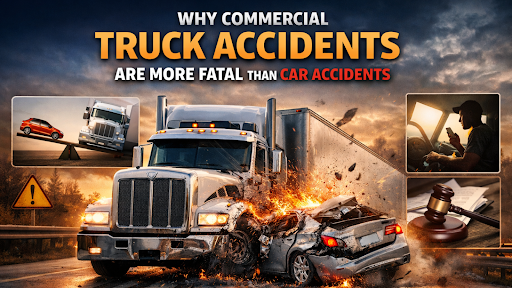
Understanding why truck driver accidents are more dangerous than car accidents can help in reducing preventable crashes.
Physics of Truck Accidents
Size and Weight Difference
A commercial truck weighs 20 to 30 times more than a typical car. When this sheer size collides with a smaller vehicle, the smaller vehicle absorbs a disproportionately higher amount of force. A fully loaded 18-wheeler traveling at 55 mph causes catastrophic structural damage, and occupants are at much higher risk of severe injuries or death.
Stopping Distance
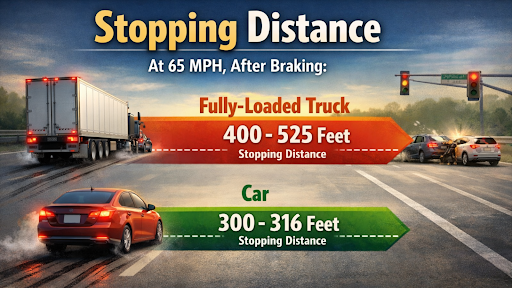
Assuming that both are travelling at the speed of 65 mph, a fully-loaded truck will cover 400 to 525 feet, and a car will cover around 300-316 feet after applying brakes. Truck drivers don’t get much time to avoid rear-end or intersection collisions.
Maneuverability Challenges
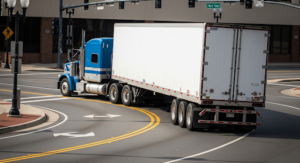
Trucks have large blind spots, and they also need more space to turn, which makes it difficult to avoid accidents.
It is important for others on the road to be aware of the truck driver’s blind spots.
Momentum
The momentum of trucks traveling at high speeds is transferred to the vehicle involved in the collision. Such collisions cause greater damage, which can result in life-threatening injuries such as severe trauma to the head, spine, and internal organs.
Common Causes of Truck Accidents
Track accidents often occur due to the following causes:
- Driver errors
- Poor Maintenance
- Bad Environmental
- Unsecure or hazardous cargo
- Violation of regulations
Driver errors like fatigue, distracted driving, speeding, and impairment often slow down the reaction time. These errors also affect the driver’s ability to make decisions.
Drivers often fail to maintain control of trucks with mechanical malfunctions. Brake failures and tire blowouts are other maintenance-related causes of truck crashes.
Weather conditions such as rain, fog, wind, and ice can reduce traction and limit visibility. Poorly maintained roads increase the risk of losing control.
Unsecured cargo can shift the center of gravity of the truck, which increases the risk of rollover. Similarly, hazardous materials increase the risk of fire, explosion, or toxic exposure.
Violation of weight limits affects the braking and suspension system. Similarly, violation of the hours of service rule leads to driver fatigue.
Types of Truck Accidents
Rear-End Collisions
In rear-end collisions, a large truck strikes a smaller vehicle from behind, crushing the rear structure of the car. This happens due to driver fatigue, distraction, or insufficient stopping distance. A rear-end collision often leads to severe head, spinal, and internal injuries for car occupants.
Underride Accidents
A car slides underneath the rear or side of a truck or trailer, bypassing the car’s safety features, such as airbags and crumple zones. The upper portion of the car is often crushed or sheared off, which results in catastrophic head and neck injuries. The fatality rate is much higher in underride accidents.
Jackknife and Rollover Accidents
In a jackknife accident, the truck’s cab and trailer fold toward each other, often due to sudden braking or slippery road conditions. Rollover accidents occur when a truck’s center of gravity shifts during sharp turns, high speeds, or cargo movement.
Jackknifed trailers can sweep across lanes, leaving little chance for drivers to escape. Rollovers often crush smaller vehicles.
Side-Impact Collisions
Also known as T-bone collisions, side-impact collisions occur at intersections or during lane changes. Trucks have large blind spots, which makes it difficult to see vehicles traveling alongside. Due to the minimal side protection of the car and the height of a truck, direct intrusion into the car’s cabin can lead to severe chest, pelvic, and head injuries.
| Crash Type | Relative Fatality Risk | Why It’s So Dangerous |
| Underride Accidents | Very high | Bypasses car safety systems, leading to direct cabin intrusion. |
| Rollover and Jackknife | High | Multiple vehicles affected; crushing and ejection risks |
| Rear-end Collisions | Medium | Large trucks’ long stopping distances result in high-impact forces. |
| Side-impact Collisions | Medium/High | Minimal side protection in cars increases the risk of injury. |
Injury Severity in Truck Accidents
Extreme forces involved in truck collisions result in fatal or permanently disabling truck crash injuries, particularly to occupants of smaller vehicles.
Typical Injuries in Truck Accidents
Traumatic Brain Injuries (TBIs)
Violent deceleration and vehicle intrusion cause the brain to strike the skull. Head injuries are among the leading causes of death in truck-related collisions. Brain injuries often result in long-term cognitive impairment, personality changes, or loss of independence.
Spinal Cord and Back Injuries
The massive force of the collision places extreme stress on the spine, causing fractured vertebrae, herniated discs, or spinal cord damage. Severe spinal injuries can result in partial or complete paralysis, which often requires lifelong medical care, mobility assistance, and ongoing rehabilitation.
Crush and Internal Injuries
Underride, rollover, and side-impact truck accidents can crush a smaller vehicle, and occupants may suffer crushed limbs, organ damage, internal bleeding, and multiple fractures. These injuries often require emergency surgery and can lead to amputations or fatal complications.
Long-Term Consequences
Many victims require extended hospitalization and multiple surgical procedures compared to car accident victims. This often results in chronic pain, reduced mobility, neurological deficits, and permanent disability. Many victims are unable to return to work, resulting in a loss of income.
There can be an additional financial burden of ongoing medical treatment, physical therapy, prescription medications, and assistive devices.
Legal Considerations
Legally, truck accidents are more complex than car accident claims as they often involve multiple liable parties. Moreover, the strict regulations also make seeking compensation a significant challenge.
| Liable Party | Fault |
| Truck Driver |
|
| Trucking Company |
|
| Cargo Owners / Loaders |
|
| Vehicle or Parts Manufacturers |
|
It is not easy to determine fault in truck accidents as it involves a detailed investigation involving logbooks, electronic logging devices (ELDs), maintenance records, black-box data, and driver employment histories.
Moreover, accessing commercial truck policies is often difficult. Trucking companies and insurers aggressively defend claims to minimize payouts.
Conclusion
Given the strict regulations and liability structures, handling truck accident cases requires representation of an attorney with a deep understanding of Florida and federal trucking laws.
Truck Accident Lawyers at Truck Wreck Florida understand the complex rules and laws governing crashes involving large commercial vehicles.
Hire a truck accident lawyer in Florida today!
Frequently Asked Questions
Who is usually liable in a fatal commercial truck accident?
Depending on the cause of the crash, the following parties can be held liable for the crash:
- The truck driver
- Trucking company
- Cargo loader
- Maintenance provider
- Vehicle manufacturer
What types of truck accidents cause the most fatalities?
Underride accidents are the deadliest, followed by rollover, jackknife, rear-end, and side-impact collisions.
What is the ideal safe distance to maintain when driving behind a truck?
In normal driving conditions, it should be at least 4 to 6 seconds. Increase the distance if you are driving in bad weather, heavy traffic, or low visibility.
What steps should you take after a crash involving a commercial truck?
Call 911 immediately and seek medical care. Document the scene and gather witness information. Contact a truck accident lawyer and do not speak to the insurer.
What evidence is critical to preserve after a commercial truck accident?
It is critical to preserve the following evidence after a commercial truck crash:
- ELD and black-box data
- Maintenance records
- Cargo records
- Photos
- Videos
- Witness statements